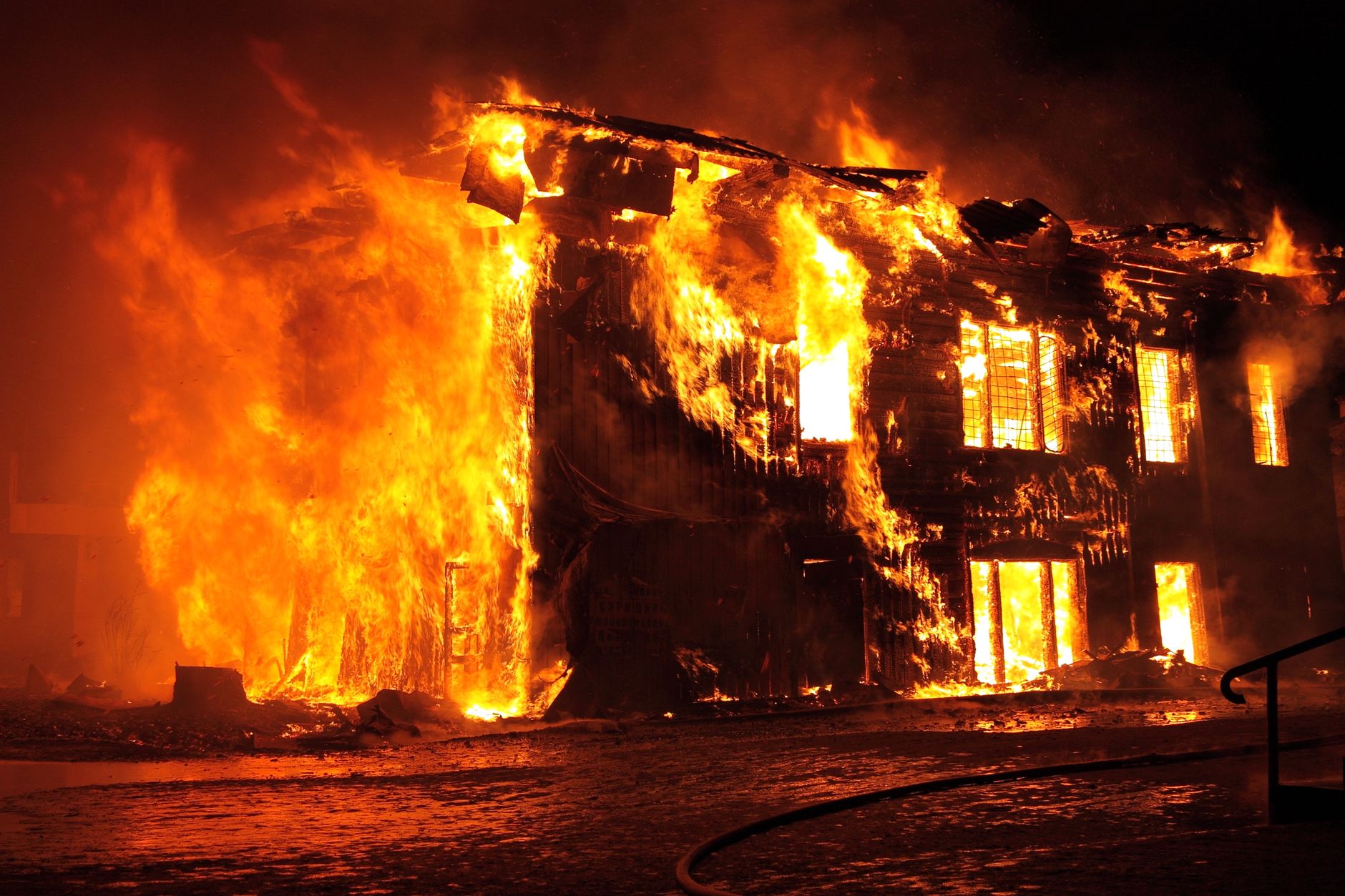
In 2016 the cable runs in Aupark’s data nodes caught fire — CCTV servers, communications and control systems. The automatic water suppression worked exactly as designed.
Then the second problem started. The water made its way one floor down and flooded the shops. The building-wide CCTV system was out for nearly three months. The damage caused by the suppression exceeded the damage caused by the fire.
This is not a failure of the technology. Water did precisely what it is meant to do — it takes heat away and it puts fires out reliably. The trouble is that nobody can say where it goes afterwards, and in a building built around cable routes and server rooms the answer is always the same: down, into everything below.
So when designing protection for a data node, it pays to invert the question. Not "what will put the fire out" but "what will still be working once we have". Powder suppresses electrical equipment and transformers up to 40,000 V without damaging them. Afterwards it is vacuumed up. The server room carries on.
After this experience, Aupark’s management turned to SAPFIR. The same reasoning brought Škoda Auto and Hyundai to autonomous powder suppression — with the difference that there the alternative was gas suppression, which is toxic as well.