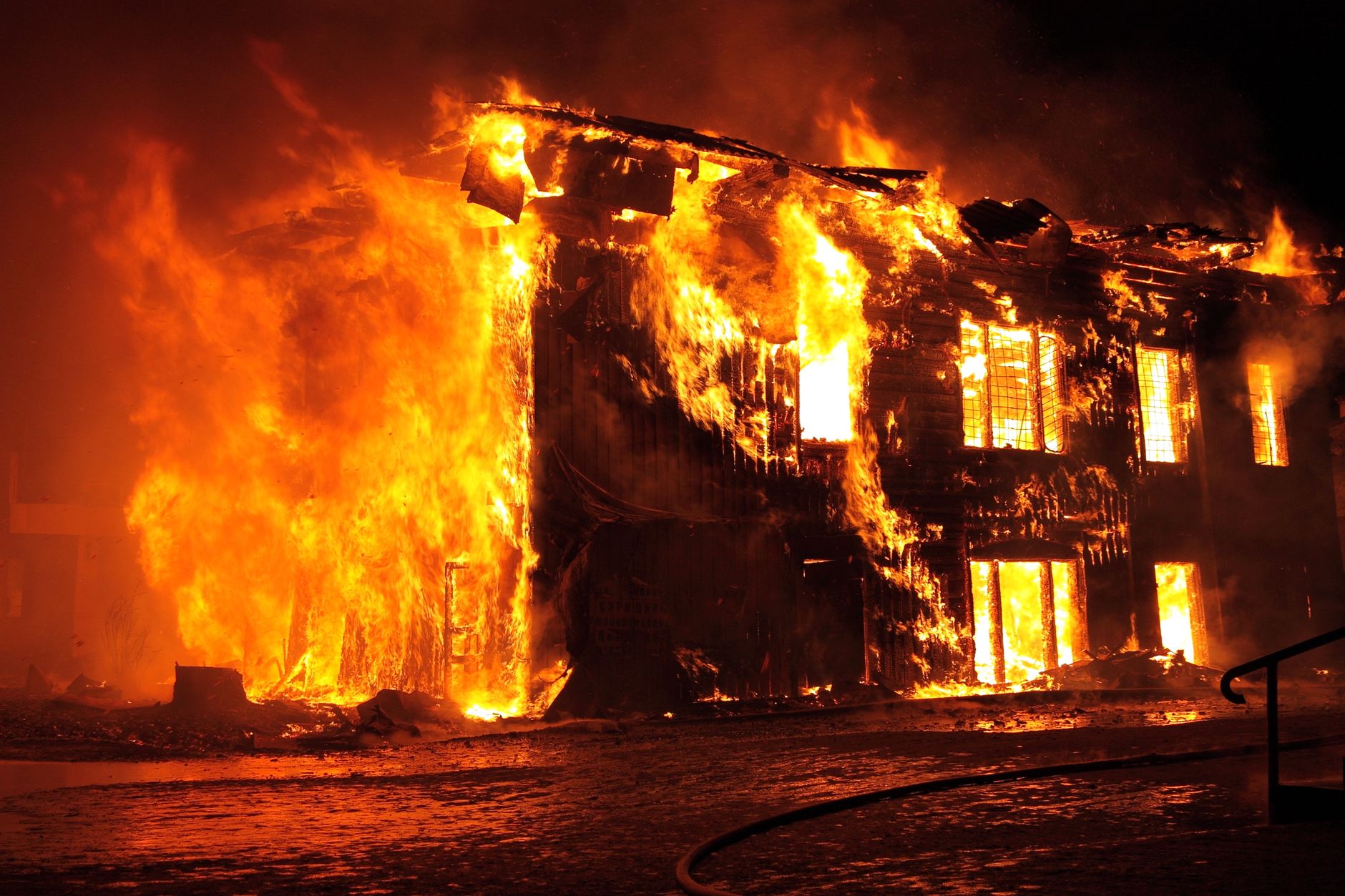
There are four classes, sorted by what burns. A is solids — wood, paper, textiles, plastics. B is flammable liquids — petrol, oils, solvents. C is gases. E is live electrical equipment.
The decision goes wrong the moment a space gets filed under a single class. Try it on a real workshop: a rack of packaging (A), a drum of oil (B), a switchboard (E) and, in the corner, a pressurised cylinder (C). Which class is that? All four, across twenty square metres.
The second mistake is counting floor area alone. An MPH-6 module covers 50 m² and 150 m³ in class A, but only 27 m² and 38 m³ in class B. The gap is not a typo in the table — with liquids the spill area governs and the fire behaves differently. Take the class A figure and apply it to a lubricant store and you have undersized the system by half.
The third mistake is the expensive one: ignoring what the suppression itself will do. Water around electronics does more damage than the fire. Gas suppression is toxic and unusable where people are — and it has technical limits too, as Nidec found when the gas failed to put the furnace out and burned with it.
MPH modules cover A, B, C and E at once. That is not a marketing line but a practical one: in a space with four fire classes, the question of which device to grab disappears. And with an autonomous system, nobody is left to ask it — nothing gets grabbed at all.